Short answer. Before you grow an event, test it on a small scale. My Boot Camp Day is my pilot: it helps validate the format, meet exhibitors and see what works before taking it to bigger events. A small event teaches you what a big plan cannot.
Organizing a big event is exciting. You imagine the room full, the stage, the people who come up to ask questions.
But if the format has not been tested yet, a big event multiplies mistakes. What was a small detail becomes a problem for a hundred people.
That is why I start small. Let me explain why, and what I watch to decide whether the format continues.
Today I want to explain three things:
- Why my Boot Camp Day is a pilot and not an end in itself.
- How to build a network of exhibitors before the next event.
- What to watch to decide whether to grow, adjust or stop.
Let's go.
Why I start with a small event
My Boot Camp Day is my pilot for the event. It helps validate the format and, from there, grow it into bigger events.
The logic is simple: a pilot lets you make mistakes where the cost is low. If something fails, it fails in front of a group you can serve well, not in front of an audience that left without answers.
A big event is not tested with a big event; it is tested with a format that has already shown what it needs.
That idea also works for businesses and teams. Do not change everything at once. Test one part, observe and decide.
Your idea needs a place to be presented
I am creating my own events and spaces to present the idea of the project.
That space also helps reinforce the credibility of the brand. When people meet the project live, they understand better how it works and what they can expect.
This is not about making noise. It is about having a place where the idea can be explained calmly, tested and corrected.
Your professional image is also work
Part of growing a project is caring about how it is presented. I am working on my image on Instagram and LinkedIn.
This does not replace the conversation or the work. But a clear presence helps people arriving at an event know what to expect, and helps those who cannot attend find a way to get to know the project.
If your business depends on trust, review what people see before they talk to you. That first impression often decides whether the conversation continues.

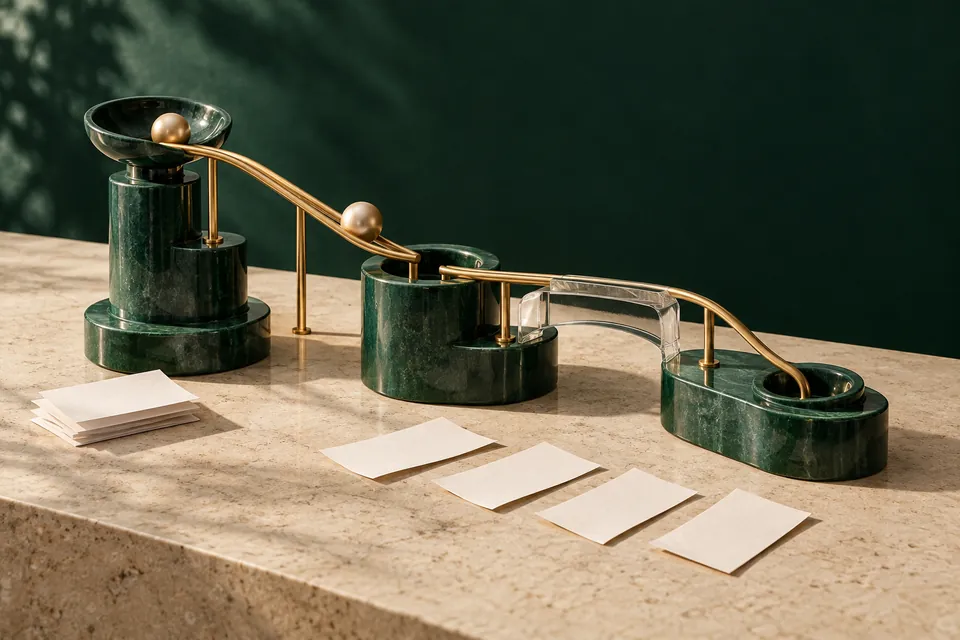
A well-read pilot shows what to fix before you grow.
Context photograph; does not depict NUUMA’s team or clients.
A network of exhibitors before the next event
I have attended different networking events, including a TEDx. There I have spoken with exhibitors to invite them to future events, and with sponsors who can become part of the project.
That network is what allows an event to grow. A date and a venue are not enough. You need people who contribute content, want to return and recommend the event to others.
My advice is to start that network before you need it. Talk with people you already know, invite those who can contribute something concrete, and thank every conversation, even if nothing is confirmed at that moment.
What to watch in a pilot event
A pilot is only useful if you observe something. If at the end you only say “it went well,” you did not learn anything that helps you decide.
This table helps you organize the review. You do not need forty metrics; you need the ones that change a decision.
| What to observe | Why it matters | Warning sign |
|---|---|---|
| Which part of the format people understood | Shows whether the explanation works | The same basic questions in every session |
| Who stayed to talk | Shows real interest, not just attendance | Nobody comes up after the session |
| Which exhibitors want to return | Reveals whether the network holds | No one wants to repeat |
| What had to change on the spot | Points to what the plan did not foresee | Constant changes in logistics |
| What followed the event | Shows whether learning reached practice | No follow-up with attendees |
Review it with the data you have, without inventing figures. If you do not have a piece of data, write down that you do not have it. That is also information for the next pilot.
When to grow and when to adjust
Growing makes sense when the format is understood, people stay to talk and exhibitors want to return. Before that, growing only amplifies what does not work yet.
Adjusting is right when the format confuses people, the logistics change every time or follow-up gets lost. In those cases, change one thing and test again.
An illustrative example
Imagine a person who wants to organize a training day for their sector. Instead of renting an auditorium, they run a session with twenty people and three guests.
At the end, they discover that the guests want to come back, but the program explanation was too long. Before the next session, they cut the presentation in half and leave more time for questions.
That small change tells them something important: the format works, but it needs less preamble. With that information, they plan the next day, now with more people, but with the same adjusted format.
This example is illustrative. It does not describe a real event or a NUUMA result.

Context photograph; does not depict NUUMA’s team or clients.
How to choose who to invite to the pilot
For a pilot you do not need the largest list. You need people who will tell you the truth and who are willing to try something incomplete.
Look for three profiles: someone who already knows the problem, someone who does not and can easily get confused, and someone with the authority to say no. Each one gives you a different signal.
Say in advance that it is a test. That way nobody expects a finished experience, and everyone can point out what is missing or what is not needed.
The day after: how to read the results
When a pilot ends, it is tempting to report only what went well. I prefer to start with what stopped: the line that grew long, the message nobody understood, the moment someone looked for something they could not find.
Write each point on a sheet with three columns: what happened, why it happened and what you would change. Then review only the first two columns with the team. The third one should come out of that conversation, not out of your impression.
What a pilot cannot prove
A small pilot does not prove that the large event will work the same way. It helps uncover problems with flow, communication and expectations. It does not justify promising results you have not measured.
A well-read pilot tells you what to fix before you grow; it does not tell you that you are ready.
What a pilot minimally needs
A pilot does not need a perfect venue or a complete program. It needs four things: a date, a place, a way to sign up, and one person responsible for collecting what happens.
If one of them is missing, the pilot becomes an informal meeting. That can be useful, but it will not tell you much about the large event.
How to communicate the pilot to your audience
Present the pilot as what it is: a test with selected guests. Do not present it as the final event or as a promise. Guests understand that their opinion matters and feel more comfortable pointing out what does not work.
After the pilot, tell attendees what you changed because of what they said. That reply closes the loop and makes them want to try the next version.
Where to keep what you learned
Create one note for each person who took part in the pilot, with what they said, what you observed and what will change before the large event. Those notes are the project’s memory. Without them, the next version starts from zero.
What to do this week
- Define which small event you can hold in the next four weeks.
- Write the three things you want to verify with it.
- List five people who could contribute as exhibitors or guests.
- Schedule a forty-minute review for the day after the event.
If you want to think about how to take what you learned into practice, read how to turn a workshop into action for your project. If the event is part of a broader strategy, review the five questions for understanding your business.
And if you want to know the upcoming meetings, check the events page or write to me to talk about your project.
Sources and context
What I describe here comes from my October 7, 2026 interview and from my work at NUUMA. The exercises and illustrative examples are suggestions for applying this way of thinking; they are not client results. For further reading: Atlassian on project management, the Deming Institute's PDSA cycle, and Atlassian on roles and responsibilities.
For your project
Turn the pilot into a test
Try the article’s approach with your own context.
Connect an idea with an action and observable evidence.
Editorial exercise. Your answers are used only on this page; they are not sent or saved.